
Most investors build portfolios by collecting tickers.
They buy what’s popular, what’s trending, or what’s being talked about the most that week.
I think that’s backward.
Every stock in a portfolio should have a job.
If it doesn’t serve a clear purpose, it probably doesn’t belong.
This framework has helped me stay disciplined, avoid overlap, and hold through volatility without second-guessing myself.
The Growth Engine
This is where long-term upside comes from.
These companies are still scaling, expanding margins, and disrupting large markets.
A good growth engine will usually be volatile. That’s the cost of asymmetry.
SoFi Technologies fits this role well.
The business is still early in its monetization cycle, building a multi-product ecosystem, and improving profitability. It isn’t meant to stabilize the portfolio. It’s meant to drive future growth.
Knowing that role ahead of time makes drawdowns easier to live with.
The Cash Flow Compounder
This is the part of the portfolio that quietly does the heavy lifting.
Strong free cash flow, disciplined capital allocation, and durability matter more here than exciting narratives.
PayPal is a good example.
The story isn’t flashy anymore, but the business throws off real cash, buys back stock, and doesn’t need perfect conditions to perform.
This is how portfolios fund themselves over time.
The Stability Anchor
Every portfolio needs something that keeps you rational when markets get messy.
This isn’t about maximizing upside. It’s about minimizing bad decisions.
UnitedHealth Group plays that role well.
Essential services, predictable demand, and durable cash flows help offset volatility elsewhere.
Stability isn’t boring. It’s protective.
Optionality and Scale
Some companies don’t fit neatly into one box.
They operate multiple businesses at scale and benefit from long-term trends without relying on a single outcome.
Amazon fits here.
Cloud, advertising, logistics, and retail all compound under one roof. Returns don’t show up every quarter, but over long periods, scale and reinvestment matter.
This is where optionality lives.
Why This Framework Works
When every stock has a job, a few things happen naturally:
• You avoid owning the same risk five different ways
• Volatility feels more manageable
• You stop reacting emotionally to short-term moves
• Position sizing becomes more intentional
You don’t need dozens of stocks.
You need a handful of great businesses doing different things for you.
Final Thought
Most portfolio mistakes don’t come from picking bad companies.
They come from unclear roles and overlapping risk.
Clarity creates conviction.
Conviction creates patience.
Patience is where compounding actually happens.
Surmount
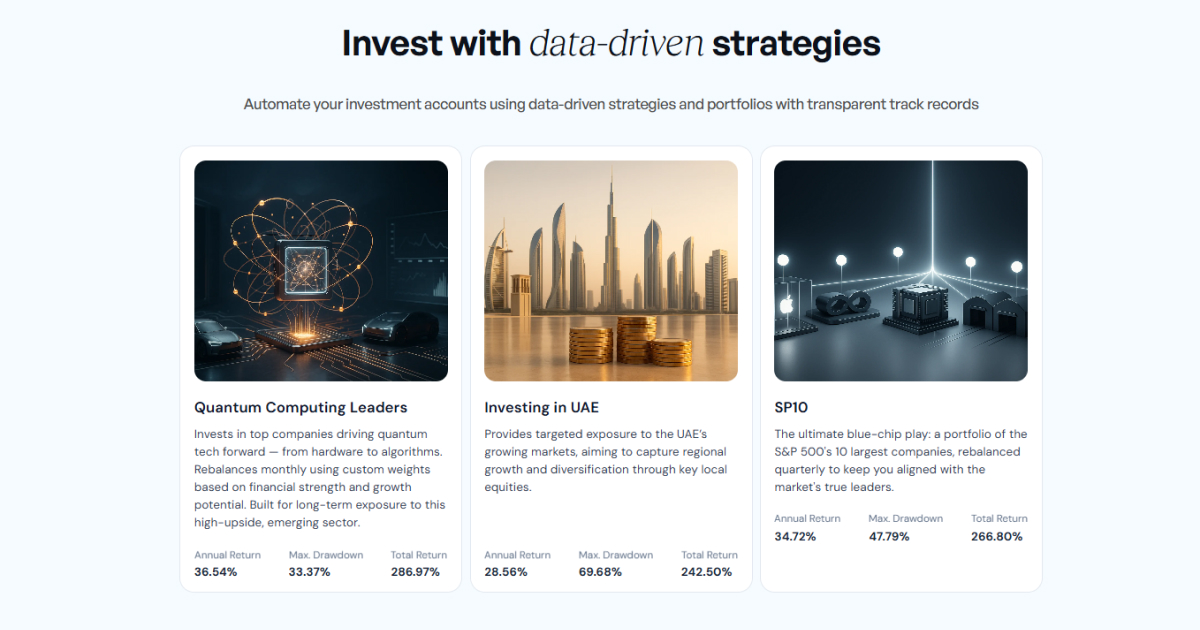
This “stocks with jobs” framework is exactly how I build and manage strategies inside Surmount. Each position has a defined role, clear sizing rules, and a long-term purpose.
If you want to follow that process and see how these frameworks are applied in real time, you can check it out here:
Disclaimer
This content is for educational and informational purposes only and should not be considered financial advice. I am not a licensed financial advisor. All investing involves risk, including the potential loss of principal. Any opinions expressed reflect my own views at the time of writing and may change without notice. Readers should conduct their own research or consult a qualified financial professional before making investment decisions.
