
Most investors focus on what could happen this month, while the best portfolios are built to survive 10+ years of cycles, interest rate environments, hype phases, and technological disruption. Today, I want to break down how to structure a long-term portfolio that not only grows — but has the potential for asymmetric upside without excessive risk.
This framework is simple, repeatable, and beginner-friendly, but still powerful enough to scale into six or seven figures over time.
1️⃣ The Core + Satellite Portfolio Structure
Instead of spreading money across 40+ random positions, aim for intentional layers:
🔹 Core Holdings (60-80%)
These are durable, cash-generating, competitively advantaged businesses or broad-based ETFs meant to be held forever.
They should have:
Predictable revenue and cash flow
Strong balance sheets
Clear long-term demand
Wide, defensible moats
Management you trust
Examples of potential core-style companies (not recommendations):
Amazon (AMZN) — diversified growth engine across cloud, advertising, & e-commerce
Alphabet (GOOGL) — dominant search, data, and AI infrastructure
UnitedHealth (UNH) — healthcare powerhouse with recurring demand
Vanguard Total Market ETF (VTI) — broad exposure + low cost
Nvidia (NVDA) — mission-critical infrastructure, not just chips
🔹 Satellite Holdings (10-30%)
These are where you pursue higher upside, innovation-driven stories, or emerging sectors.
Think:
Early-stage digital disruptors
AI, biotech, fintech, cybersecurity
Potential 5–10x+ winners over a decade
Possible satellite names could include:
Hims & Hers (HIMS) — digital health + subscription retention model
Oscar Health (OSCR) — tech-driven insurance disruptor
AbCellera (ABCL) — biotech platform leverage potential
These positions are smaller, monitored closely, and sized based on conviction + risk tolerance.
2️⃣ Sector Balance = Risk Management Without Over-Diversifying
A well-designed long-term portfolio shouldn’t rely on one economic engine.
A balanced mix may include exposure to:
Technology / AI
Healthcare
Financials & fintech
Consumer staples & discretionary
Industrials or energy (optional)
This prevents portfolio performance from being tied to a single theme, interest rate cycle, regulatory risk, or innovation timeline.
3️⃣ Quality > Quantity (Boring Usually Wins)
The point isn’t owning a lot of stocks — it’s owning the right ones for a long time.
Ask these questions:
Does this business get stronger as it grows?
Will it likely exist and matter in 10 years?
Can it maintain pricing power?
Is the business model recurring or subscription-based?
Is the valuation reasonable relative to growth?
Long-term compounding is much harder with businesses that:
Dilute shareholders
Burn capital without a clear path
Are cyclical or trend-dependent
Live off hype, not fundamentals
4️⃣ Concentration & DCA: Know Your Comfort Zone
Great portfolios are built through continuous contributions, not perfect timing.
Dollar-cost averaging (DCA) smooths emotions, reduces regret, and shifts focus toward accumulation.
Concentration is optional — but it should be earned through research + conviction, not emotion or FOMO.
My rule of thumb for concentration:
Scale up position size only when conviction increases
Size based on fundamentals, not recent price movement
Let winners grow organically via compounding
5️⃣ The Goal
Not the highest returns this year.
Not beating someone on social media.
Not chasing the new hottest ticker.
The goal is to own durable, category-defining companies — and allow time, not trading, to do the heavy lifting.
Final Thought
A great portfolio is built with patience, structure, consistency, and clarity — not luck.
Remember:
The market rewards time in the game, not speed.
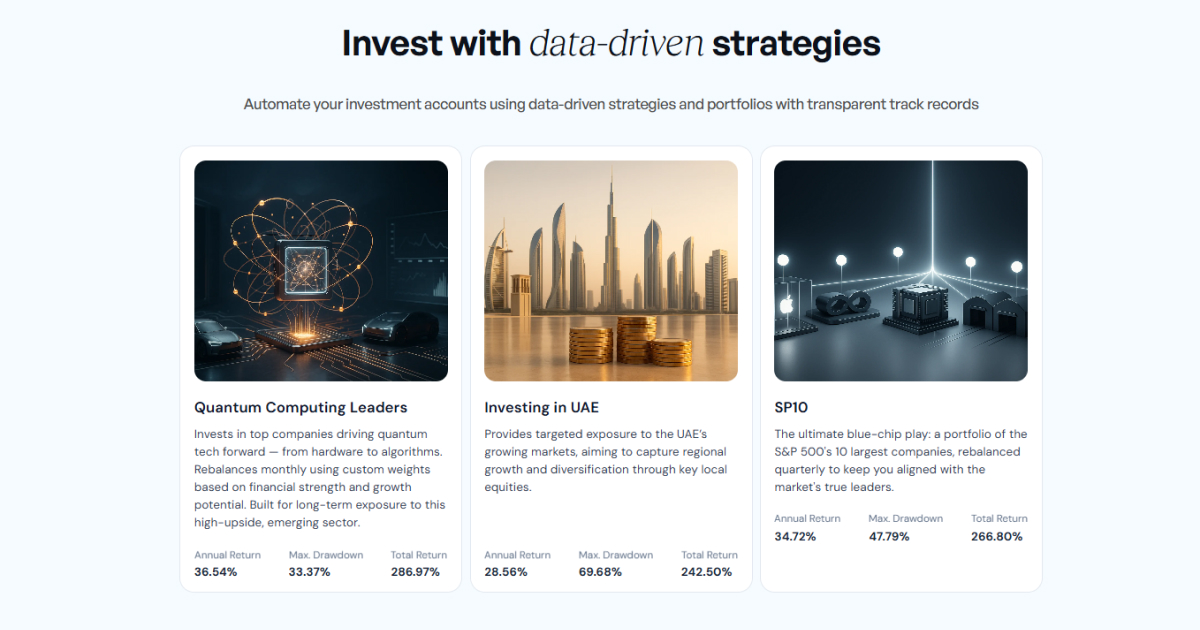
If you want data-driven investing tools that combine professional-grade analytics with real strategy execution, check out Surmount AI — the platform helping retail investors build institutional-style portfolios and automated strategies based on real back-tested data.
Disclaimer
This content is for educational and informational purposes only and should not be considered financial, legal, tax, or investment advice. All tickers referenced are examples, not recommendations. Investing involves risk, including potential loss of principal. Always do your own research or consult a licensed professional before making financial decisions.
